Saturday, January 4, 2014

Emergency Preparedness: Natural and Human-Generated Disasters

Emergency Preparedness

   Natural Hazards and Disasters    
   In Maryland, we have the possibility of many natural and Human-generated disasters, like building fires, winter storms, extreme cold or heat, tornadoes, hurricanes, flooding, terrorist attacks, local crimes, black outs/ loss of power, droughts. These natural and human generated disasters are out of our control to prevent, but we can prepare ourselves and our families for these pending disasters. In this section of my blog I am going to provide two examples of disasters and provide information on how we can prepare for them both in a child care facility and at home. 
Crime Stoppers - KTBS.com
Local Crimes and Terrorist Attacks
          On December 14, 2012, a whole world was destroyed by an act of one mentally disturbed young man, this was not the first incident like this that has plagued our world and it will not the last time. The Sandy Hook Elementary School victims, and survivors did not expect to go to work or school and fight for their lives, but with the quick thinking reaction of the teachers and students less lives were lost that day. We all know we should not live our lives in fear of the unknown, but we can be preparing if something does happen. About a decade ago when I was working as a school age teacher at one of the sister center, of the current center that I'm an Assistant Director, Maryland, Washington DC and Northern Virginia had two men (aka the DC Sniper) who would drive up and down the I-95 corridor just randomly it seemed at the time shooting people at school, at the mall, at the gas station, and practically everywhere. I remember being scared to leave my house to drive to work since I lived and worked off the I-95 corridor, but I knew I had to be there to protect the children in my care. My center was put on lock down and you had to stay away from all windows and doors, this was hard to do because the center was pretty much windows and doors.  We had the parent call the center, right before they would come so we could have a person at the door to let them in and then re-lock the door.  These are two types of human generated disasters that could cause harm that we should be prepared for.
          How do we prepare for a potential human generated disaster like the two mentioned above and the others that we are all familiar with? Many of these we have no warning signs like we do in weather or natural related disasters, so we must prepare as if we don't know it’s going to happen, much like we do for home fires.  What should we do as parents and care givers? First, work with your local law enforcement to maybe get a call about possible crimes that are happening in your area. Directly behind and off to the left of my child care facility are banks, my center has it set up that is the police notify us with the possible robbery taken place near a bank in our area, so we can go on lock down. This mean we lock all our doors and go to the interior of our building where there is no windows, until we hear back from the law enforcement that the coast is clear.  If we did not have this set up, we would never know and could potentially harm a staff member or child.  As we know this type of disaster is unpredictable and can pop up with little to no warning so it is best to prepare every one the best way you can. Like with a house or building fire, and having a safe place to meet once everyone is outside, you should do the same and set up a safe place for everyone to go inside the building or house, or depending on the situation at a neighbors or other safe hidden place.
Maryland Weather: Archives
Weather Related Disasters
          With the upcoming winter month, it is always a great idea to prepare everyone, the house, and/or child care facility for the extreme cold to prevent pipes from freezing, carbon monoxide poisoning (from fire places and cars started in a garage or tail pipes covered by a ton of snow or ovens turned on to heat the house), and power outages due to snow and ice. How do you prepare for the winter storms, before, during, and after?
          A few years ago Maryland was hit with a nasty winter, the weathermen were predicting 2 to 4 inches of snow and ice to layer the ground, well like always they got it wrong and we were hit with 6 to 8+ inches of snow around the evening rush hour. It was a mess, cars and people were stranded on the side of the road, and many were in car accidents trying to make it home to their families. Many places closed early to get people home safe but the storm hit fast, and dropped a ton of snow. My child care center stayed open, but my director and I sent our staff home and we stayed with the children who were left. Later that evening, the Governor called a state of emergency mandating everyone stay off the roads, so we started to prepare dinner for the children who were left, and comforting them that their parent are coming to get them but traffic was bad, and  that they will be  staying with us until their parents could make it to get them. This was a fluke storm and we had to do our best to prepare the children and center for the extreme weather.
           How did we prepare the center for the cold temperatures, we turned on the water to a trickle to keep the pipes from freezing. We made sure that in case of a power outage we had enough blankets to keep everyone warm and flashlights for light. How can you prepare your home and families just like we prepared our center that night and any night they our calling for winter weather and extreme cold temps, is to make sure you have enough food, and supplies in the house to possible hold you and your family for at least a week. Also run the water through the pipes, turn off all outside water, and drain the pipes. Make sure that you have candles, flashlights, your cell phones are charged, and blankets on hand in case of a power outage. That's how you can prepare your house or other building for an upcoming winter storm, or extreme cold temperatures.       
Maryland emergency officials
How to Prepare
          We practice these emergency drills once a month like we do fire drills. Maryland State law only requires child care providers and schools to do disaster drills twice a year, but fire drills every month. My company over rides the COMAR regulations and says we should prepare the children each moth like we do for fire. We use different sounds to determine which drill we are doing, the fire drill is of course the fire alarm of the building, and for any disaster drill we use an air horn and shout out the disaster so they know where to go.
          Besides preparing the children, Maryland COMAR Regulations states that the center at all times must have an emergency preparedness certified staff member in the building. At my center we have six out of fourteen staff members are certified, and at all times there is at least two of us in the center. In the class we all took together we had to develop a plan of who would be in charge in the event of a disaster, where to go inside and outside of the building, who would be in charge of getting the emergency cards and making sure we have a phone, media, or social media account to alert the families, and who would maintain and grab the emergency supplies, emergency radio, batteries, flashlights, water, first aid kit, snacks, and blankets. We also had to plan where if evacuated we would go, we have it set up with the local school, to house a few staff members and our younger children that we cannot transport with our buses, and the local grocery, or surrounding businesses to hold the rest of us. It is always good to have a backup plan and inform the parents of any changes. In our class we also learned that we should set up a phone tree where the center may call a few parents and those parents call more and so on until all parents are reached. But with this you are not sure that all the parents will be reached and you have to rely on someone else to make sure that it is done. With the invention of social media, and practically everyone having a Facebook, twitter or some other account, that it is easy to setup an account for your childcare facility and friend every family member enrolled and just post any information you may have to let them know the children are safe. With the disaster that happened in the Philippines, about a month ago, social media played an important role in communicating with the outside world. So I think that it would be a great idea to set something like the phone tree, or social media page to inform not only families of a disaster that happens at a child care facility or school but at home as well.   

Safety Practices and Policies for Preschoolers

Safety Practices and Policies 

As an early childhood educator for over fifteen years, I have seen how curious, active, and eager children are to explore their environments. As the caregiver of these young explores I must be aware of potential dangers that could be harmful, and threaten their safety. I must first be aware of my own surroundings and then look at the environment as if I was a young child, to see any possible safety issues, like broken toys, small choking hazards, and the possibility of falling.  In this blog, I am going to explore many different safety issues that can cause harm to our young preschool aged children.
                     Allergies and Allergic Reactions


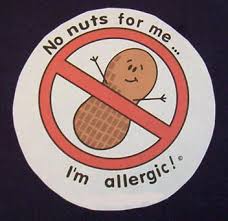
allergies is increasing.My first safety issues that can cause harm to not only preschool age children but everyone are allergies. I’m not talking just about those pesky seasonal allergies that plague many of us each and every year, but also the animal, medicine and food allergies. Over the years I have noticed a spike in parents informing us about the different allergies that their children have, like peanut and other nut products, milk, gluten, soy, melon, seafood, the pesticides that farmers use to protect their crops, and even medicine. My best friend’s daughter is allergic to practically everything (jokingly saying). She is allergic to all nut products, melons, shellfish, and skin on apples, cat, evergreen trees, pollen, and many other seasonal type things. When my friend realized her older son was allergic to peanut butter he was about Two years old, at daycare he got a hold of another child’s lunch and began to become red around his mouth, she immediately called the doctor to get an appointment for him to be looked at because she knew personally how dangerous food allergies can be. This was over ten years ago and her doctor told her that they don’t test children that young for allergies, but knowing her medical history they tested him, and told her to bring her daughter back when she is about the same age, or eating table food and they would test her. Food and medicine allergies are something that should not be taken lightly, due to the harmful outcomes that could possibly happen. My friend did the right thing, and immediately called the doctor when she noticed that her children were showing signs of an allergic reaction. At my Child Care facility we have to keep a record of what we serve, and any medicine that we give our students for about five weeks. So as a parent and caregiver of my own family member I do the same, because I never know if the doctor might ask what has change in their diet or environment.
All motor vehicle accidents
Motor Vehicle Accidents
Since the unforeseeable motor vehicle accident which caused the death of Paul Walker (actor best known for Fast and the Furious) and his race car driver friend, I have been more aware of how many accidents that I hear about on the news that children are involved in. Motor vehicle accidents are the leading cause of childhood injuries, due to not properly installed car seats, or the wrong car seat for the child’s age and weight. I know as a driver that there are many different reasons that cause motor vehicle accidents that are out of our control, but what we can control is the safety of our passengers and ourselves. With laws always changing, I am constantly researching the car seat law for my state to make sure that all of my children in my care are in the proper car seat and when they no longer need to be it one. The state of Maryland the law is any child under the age of 8 and shorter than 4’9 must use the age appropriate child restraint.
Playgrounds can provide hours
Playground Safety
As an educator and aunt to young children the safety issue that is most dear to my heart is Playground Safety.  As I read in Safety, Nutrition, and Health in Early Education by Cathie Robertson, playgrounds are one of the leading causes for childhood injuries, due to the fact of lack of supervision, misuse of equipment, and age appropriateness of the equipment. The playground safety policy that my staff and I follow at my child care center is that we only use the playground designed for the age group we are caring for and we are always looking around and knowing where our children are at all times. We are always walking around, never sitting, playing with the children to long. I even do this when I am not working and taking my nieces and nephews to the playground, I am always watching my own family members as well as the others. Sometimes I think that the parents a crept out by me watching and making sure that the children are safe until I tell them I am a teacher then they understand. For an example I was at my friends daughter’s birthday party at a moon bounce place when I felt I was correcting the children on how to properly use the moon bounce structures then the staff there was, a child was climbing the side of the six plus foot tall slide and could have fallen and really hurt himself until I said, “I don’t think you should being doing that” and the child stopped. Let’s all work on dropping playground injuries in children by properly supervising these children in our care.  
                            Fire Safety
Understanding Fire Safety
Another cause in childhood injury that is out of our control, but could be prevented is fire, weather related, and other disasters. When I was in school I remember how important it was that we learned about what to do in case of a fire, and not to be afraid of the strange man or women wearing a mask. I also remember all of the fire drills we had to do and the place you had to go (depending on where your classroom). The classrooms in the front of the school had to go to the other side of the parking lot furthest from the school. Today by the COMAR regulations set by my state my child care center must conduct fire drills once a month, and disaster drills twice a year. To teach them the difference in the places we go we use an air horn for the disaster drill. The more times one does these types of drill, it will become second nature and will go where they needed to go to be safe.
Water Safety for Kids
Water Safety
Water Safety is another cause of childhood injury that we can prevent by providing a safe environment and a strong set of rules. At my child care facility, during the summer months we have water play, but we don't have any pools or standing water. We use a sprinkler and have extra staff to supervise the children. For our school age children if we go to a pool we have to be the only ones in the pool and it most have life guards present. We also prepare the children ahead of time by going over water safety rules.
At home, the pool, the ocean, the ponds or lakes, you should always supervise the children and make sure that they know the rules that you set for them. A large body of water is a fun but very dangerous place for children and adults who may not know what to do if they find themselves tired, or in trouble. Another way to prevent injury around bodies of water is to take swim lessons prior to any water activity, and use the proper lifesaving or floating devices. When it comes to water safety, whether you are at a pool, the Ocean, on a boat, or at the lake you should always follow the rules posted and never leave children unattended.
How to Prevent Childhood Injuries
provides injury prevention
Providing a safe environment is key in preventing any childhood injury. How can we provide a safe environment for our children? Well that is a good question, we can first research and read up on different harmful situations and safety threats that can injury our children at different ages, and how we can prevent them. Second look at the environment as a child would. Thirdly use safety precautions, like cabinet locks, outlet covers, and read the ingredients on food products. Next provide the child with educational age appropriate toys. And lastly, always use proper supervision both indoors and outdoors. I know that many of us follow these simple “RULES” when it comes to the safety of our children, whether at school or at home. 

The safety issues that I mentioned in this blog are just a few of the hazardous situations and safety threats that cause injuries to our children in and out of our supervision. The ones that I mentioned are the ones that are the most prominent in our lives today. I hope that my blog entry was informative and helpful to you.